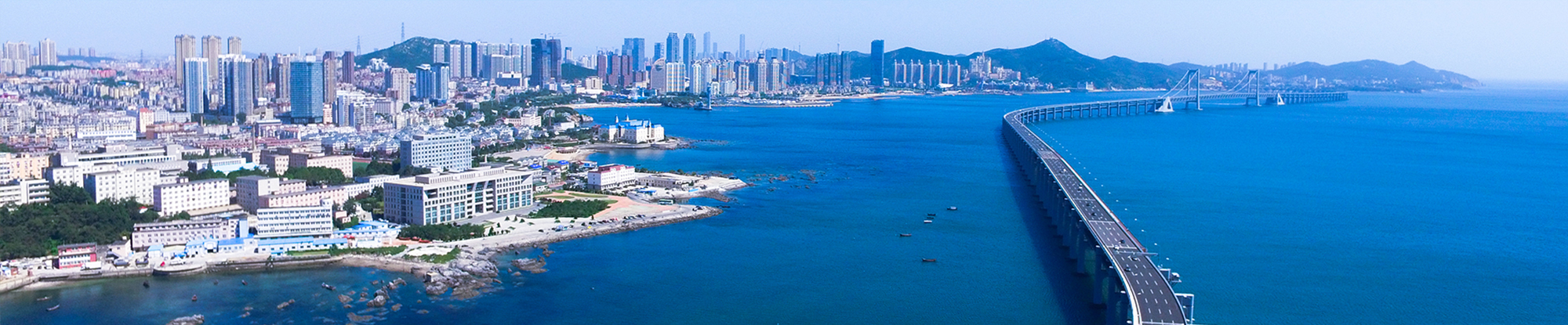
Recently, in order to deepen international academic exchanges and comprehensively understand research progress, industrial layouts, and policy mechanisms in Nordic countries’ core areas, including aquaculture technologies, marine resource utilization, and ecological environmental protection, Professor Ding Jun, Dean of the College of Fisheries and Life Science at our university, led a five-member research delegation composed of key researchers from relevant fields to Norway and Iceland for academic exchanges.
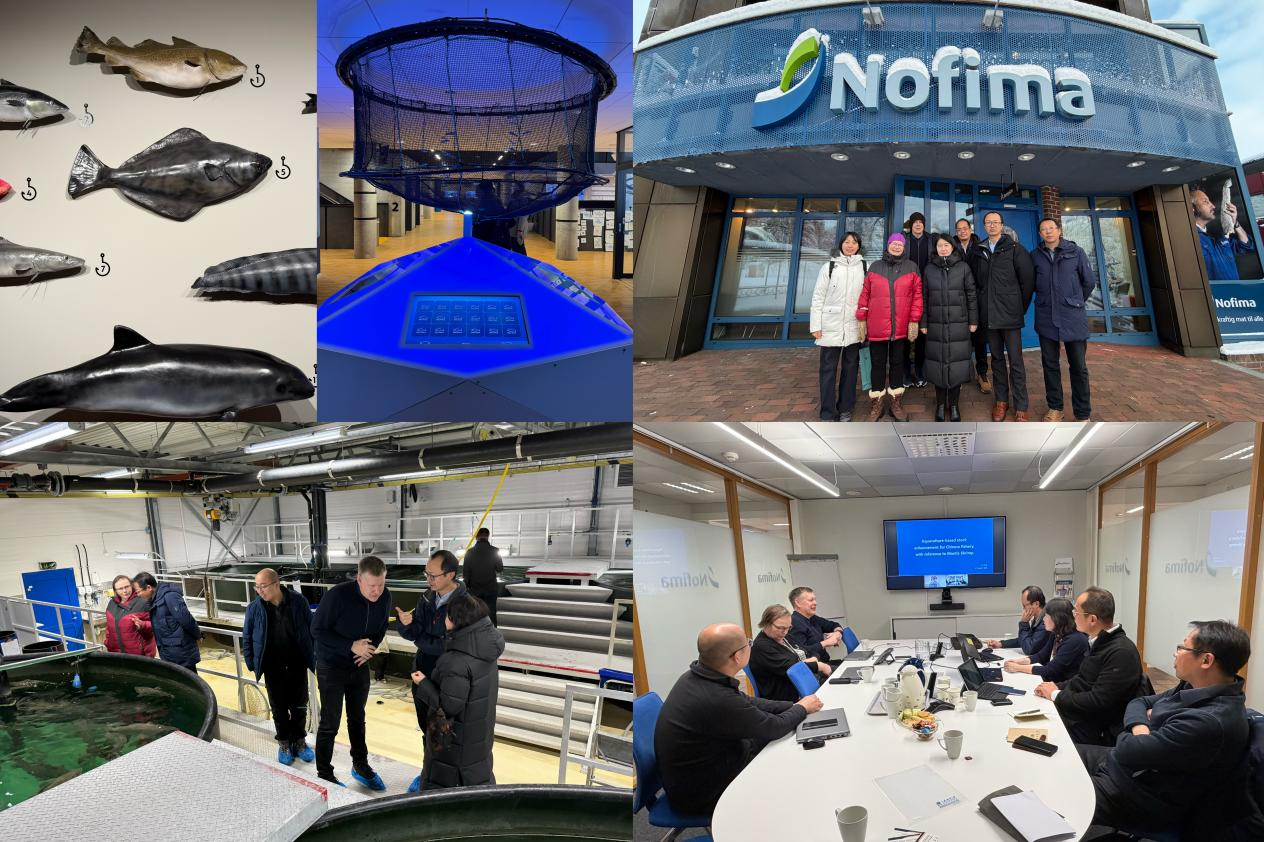
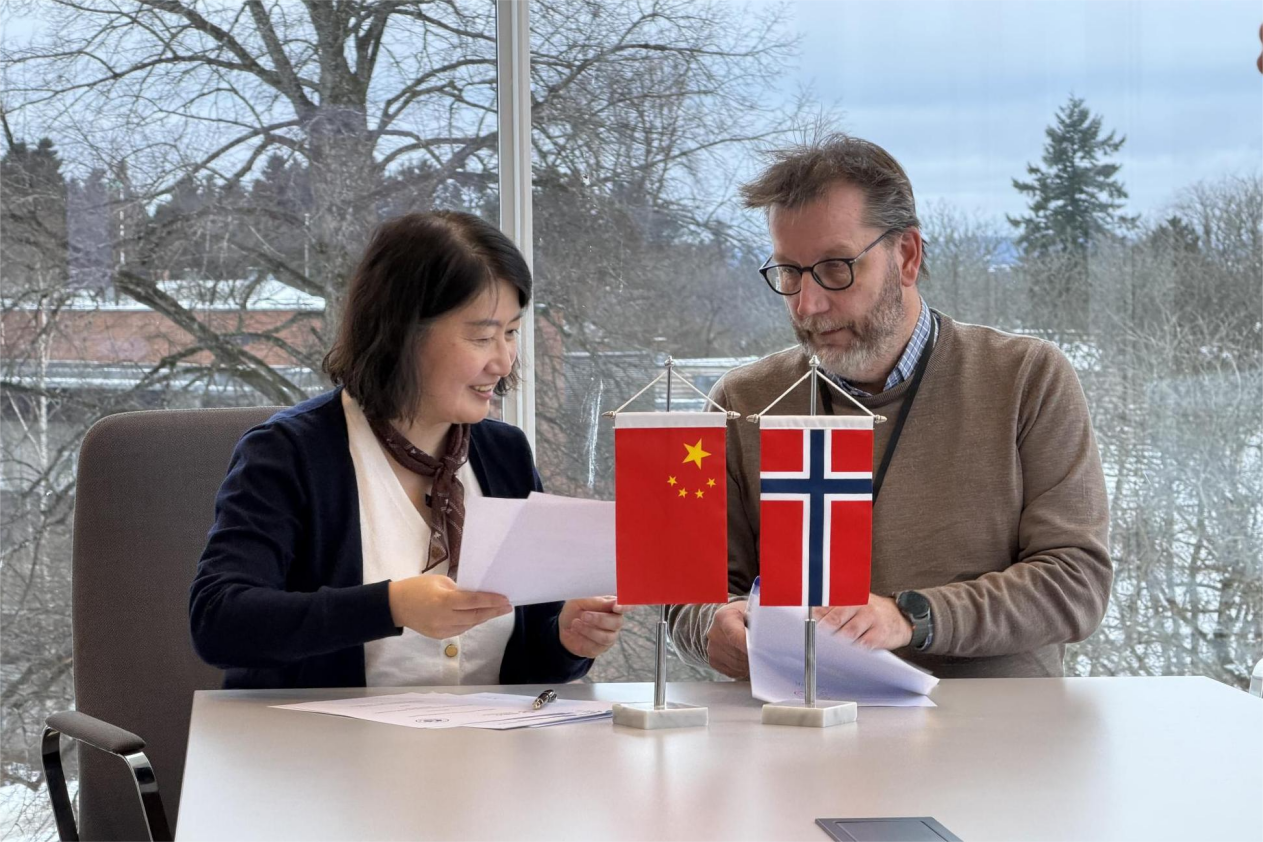
During their visit to Norway, the delegation systematically studied advanced equipment technologies such as large-scale net cage aquaculture and intelligent feeding systems. They engaged in specialized discussions with fish geneticists on aquatic genetic breeding and marine biotechnology. Focused on core topics like genetic breeding of cold-water fish, recirculating aquaculture systems, and ecological chain construction for low-trophic-level organisms, both sides conducted in-depth technical collaboration and exchanges. On behalf of our university, Ding Jun signed the Memorandum of Understanding between the Norwegian Institute of Bio-economy Research and Dalian Ocean University, alongside the Joint Construction Agreement for the China-Norway Joint Laboratory on Marine Biological Resources Development, Utilization and Healthy Aquaculture with the CEO of the Norwegian Institute of Bio-economy Research (NIBIO). These documents outlined clear directions for scientific research collaboration, talent development, and achievement transformation, initiating a long-term stable academic partnership.
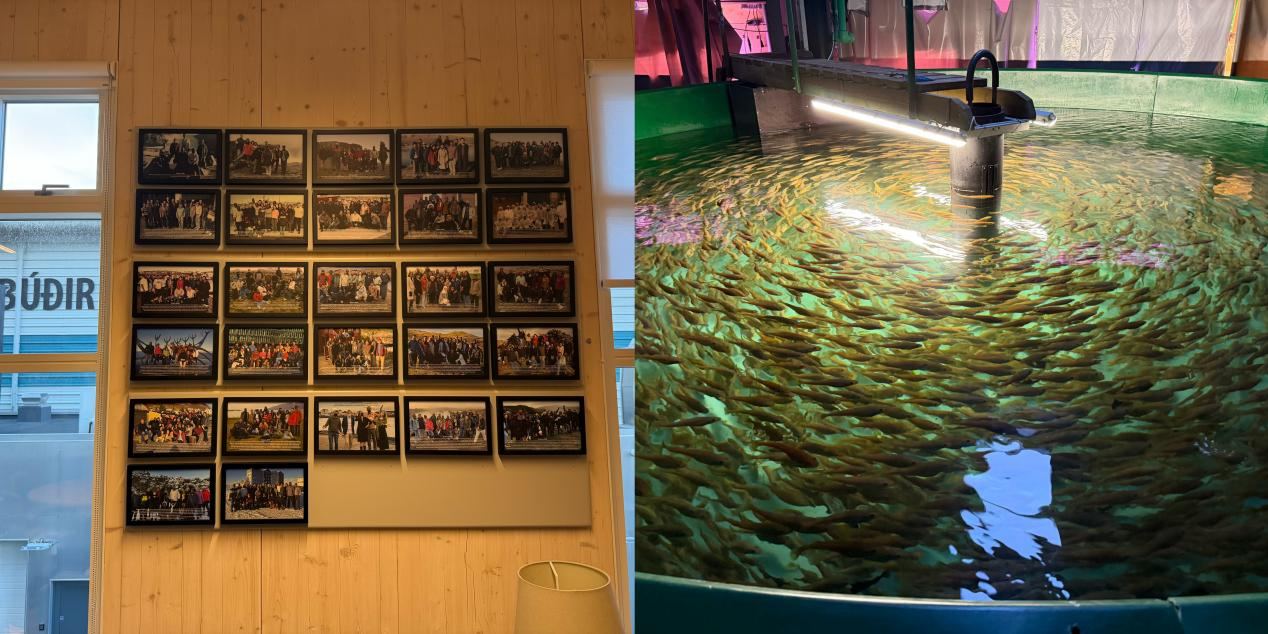
During their visit to Iceland, the delegation conducted field investigations at the Icelandic Marine and Freshwater Research Institute’s aquaculture experimental station. Building on nearly two decades of cooperative foundation, they held specific discussions on topics such as deep-sea net cage aquaculture, recirculating aquaculture technology applications, and FTP training program enhancement, as well as key challenges such as artificial seed production technology and water quality control. These efforts provided valuable experience for the introduction of high-quality germplasm resources and localized breeding.
The visit achieved remarkable outcomes. It not only systematically acquired Nordic expertise and experience in cold-water fish aquaculture and germplasm conservation, addressing technical gaps at the university, but also expanded diversified international cooperation channels with relevant institutions. Leveraging this visit, our university will deepen regular collaboration with Norwegian and Icelandic partners along the “germplasm introduction—technical research—domestication breeding—industrial application” pathway. It aims to establish an international research and talent development platform, striving to create the Northern China cold-water fish aquaculture and industrialization demonstration base, thereby contributing wisdom and strength to the green and intelligent upgrading of China’s aquaculture industry and the high-quality development of the marine economy.
Source: College of Fisheries and Life Science
Writers: Zhang Qian
Executive Editors: Ding Jun, Min Yuanhe
Reviewed & Approved by: Zhu Hui, Fu Changbing